Healthy, glowing skin starts from within, and vitamin B6 (pyridoxine) plays a crucial role in maintaining skin strength, elasticity, and overall appearance. This essential B-complex vitamin supports collagen production, skin cell regeneration, inflammation control, and protein metabolism, all of which are vital for youthful and resilient skin.
Incorporating vitamin B6-rich foods into your daily diet is one of the most natural and effective ways to improve skin health without relying solely on supplements. In this guide, we’ll explore the best food sources of vitamin B6, how they benefit your skin, and how to include them in a balanced diet.
Why Vitamin B6 Is Important for Skin Health
Vitamin B6 helps the body:
Support collagen synthesis, improving skin firmness
Reduce inflammation and redness, beneficial for acne-prone skin
Assist in amino acid metabolism, essential for skin repair
Maintain proper hormonal balance, which impacts skin clarity
A deficiency in vitamin B6 can lead to symptoms such as dry skin, cracks at the corners of the mouth, rashes, and dull complexion.
Best Food Sources of Vitamin B6 for Healthy Skin
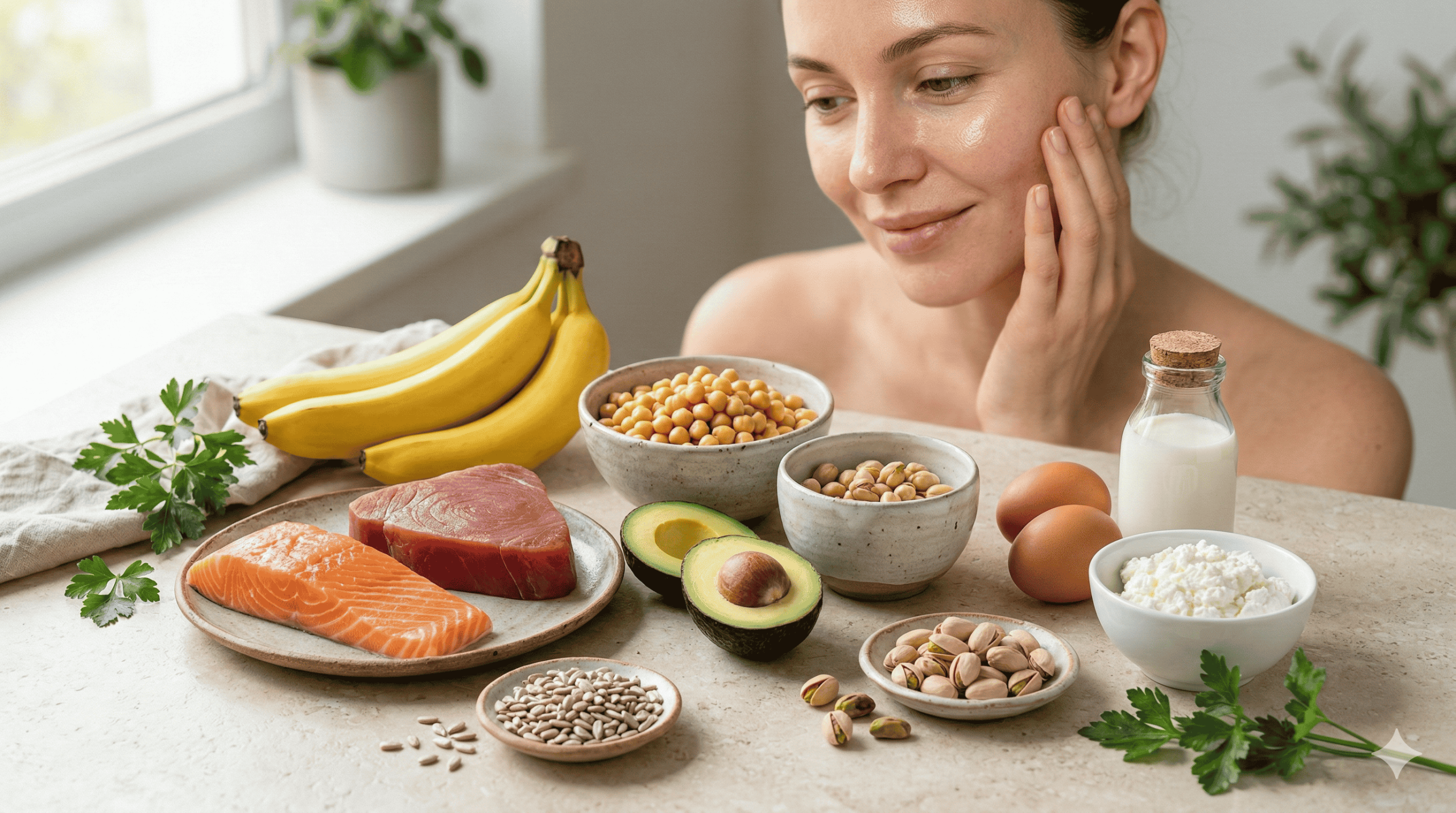
- Fatty Fish: The Top Natural Source
Fish varieties offer some of the highest concentrations of vitamin B6 available in natural foods.
Salmon (especially wild salmon)
Rich in vitamin B6 and omega-3 fatty acids, salmon supports skin hydration, elasticity, and inflammation control.
Tuna (yellowfin and albacore)
Tuna steak contains exceptionally high vitamin B6 levels and helps support collagen formation and skin renewal.
Including fish 2–3 times per week can significantly boost vitamin B6 intake while improving overall skin texture.
- Dairy Products: Easy Daily Sources
Dairy foods provide moderate but consistent amounts of vitamin B6.
Milk
One cup of milk provides approximately 5% of the daily recommended vitamin B6 intake, making it a convenient daily source.
Ricotta Cheese
Ricotta stands out due to its high whey protein content, which contains water-soluble vitamins like vitamin B6. Whey proteins also support skin repair and hydration.
Consuming dairy regularly helps maintain steady B-vitamin levels essential for healthy skin metabolism.
- Poultry and Eggs: Protein-Rich Skin Support
Animal protein sources are excellent for both vitamin B6 and essential amino acids.
Chicken and turkey
These are among the richest poultry sources of vitamin B6 and support skin tissue repair.
Eggs
Eggs provide vitamin B6 along with biotin and protein, supporting skin strength and barrier function.
These foods are particularly beneficial for individuals recovering from skin damage or inflammation.
- Plant-Based Vitamin B6 Sources for Vegetarians
Vegetarians and vegans can still meet vitamin B6 requirements through plant foods:
Bananas – Easy to digest and skin-friendly
Chickpeas – High in vitamin B6 and plant protein
Avocados – Provide vitamin B6 along with healthy fats for skin elasticity
Including a variety of plant-based foods ensures balanced nutrient intake for skin health.
- Nuts, Seeds, and Whole Grains
Sunflower seeds – One of the most concentrated plant sources of vitamin B6
Pistachios – Rich in vitamin B6 and antioxidants
Fortified cereals – Often enriched with vitamin B6 and other B vitamins
When fortified cereals are consumed with milk, vitamin B6 absorption improves, making breakfast a powerful skin-boosting meal.
How to Plan Meals for Optimal Vitamin B6 Intake.

To support healthy skin:
- Include at least one vitamin B6-rich food per meal
- Combine animal and plant sources for better nutrient balance
- Pair vitamin B6 foods with protein and healthy fats for improved absorption
- Avoid over-processing foods, which reduces B-vitamin content
Consistency is key—regular intake ensures steady vitamin availability for skin repair and renewal.
Can Vitamin B6 Improve Skin Conditions?
Adequate vitamin B6 intake may help improve:
- Acne caused by hormonal imbalance
- Dry, flaky, or irritated skin
- Poor wound healing
- Inflammatory skin conditions
However, vitamin B6 works best as part of a balanced diet, not as a standalone cure.
Frequently Asked Questions (FAQ)
How long does it take to see skin improvements from increasing vitamin B6 intake?
Most people notice initial skin improvements within 4–6 weeks of consistently meeting vitamin B6 requirements through diet or supplementation. More noticeable changes in collagen production, skin texture, and elasticity may take 2–3 months.
Can vitamin B6 deficiency cause permanent skin damage?
No. Vitamin B6 deficiency-related skin problems are usually reversible. Once adequate vitamin B6 levels are restored through proper nutrition or supplements, skin function and collagen production typically recover over time.
Can I take vitamin B6 supplements for skin health?
While supplements can help in cases of deficiency, it’s best to prioritize food sources of vitamin B6. Excessive supplementation without medical advice may cause nerve-related side effects.
What is the recommended daily intake of vitamin B6?
For adults, the recommended intake is approximately:
- 1.3–1.7 mg per day, depending on age and gender
A balanced diet usually meets this requirement naturally.
Final Thoughts
Vitamin B6 is a powerful yet often overlooked nutrient for skin health. By incorporating a variety of vitamin B6-rich foods such as fish, poultry, dairy, nuts, seeds, and plant-based options, you can naturally support collagen production, skin repair, and overall skin vitality.
Healthy skin isn’t built overnight—but with consistent nutrition and smart food choices, long-term improvements are absolutely achievable.